


What is Tinnitus?
Tinnitus is a condition that presents as a ringing in your ears. A more technical definition is the perception of sound when no external sound source is present. It's also often described as a constant ringing, buzzing, or hissing sound. The intensity varies from very mild to catastrophic.

My Tinnitus Improvement
I developed what could be labeled as moderate tinnitus about 18 months ago. Although it is hard to measure objectively, my overall sense is that I am considerably better now than when it first came on and I continue to improve. That didn’t happen by accident.
Since I know so many people who suffer from it and most don’t improve much over time without some kind of intervention, I thought I would share the sources of my improvement. I genuinely hope this article helps people who are suffering with tinnitus now, and/or that you can share this information with anyone you know who is suffering.
What Didn’t Help
When I first had tinnitus symptoms, I went through several steps that didn’t help. The number of “solutions” that have little or no merit are plentiful, and except for one, none are FDA approved. In addition, you are more likely to find “solutions” through a Google search rather than through peer reviewed articles. Granted, there are likely some treatment plans that may have merit, but none that I tried helped me.
My first instinct was to schedule an evaluation appointment with an ENT. Unfortunately, the ENT I saw at the time as well another ENT at a later time were not at all helpful except to eliminate the possibility of me having a more serious problem than tinnitus. Unfortunately, the two ENTs were not only unsympathetic, but rude.
Then I read you might be able to reduce the symptoms by reducing stress levels. The recommendations centered around meditation and relaxation as a form of therapy. However, I have never liked meditating under the best of circumstances and with tinnitus, I found it even more unpleasant. So that avenue was unhelpful for me. To be fair, I still haven’t given up on other forms of relaxation or mediation but so far, I haven’t been doing it.
Other avenues I tried included a long series of visits to an acupuncturist. After months of going several times per week, there was no measurable improvement. Furthermore, I also had two mesenchymal stem cell injections near the ear over a six-month period. I still didn’t notice any change.
What Did Help?―Treble Health
Treble Health is a paid service, and I have found their support and recommendations to be worth every penny. It is a company comprised of audiologists who have special training and experience in treating patients with tinnitus. Essentially, you pay for virtual consultations with a specialized practitioner.
They offer a free consultation, which to my surprise was not a hard-sell meeting. It was informative and clearly spelled out what they could offer and how much it would cost.
Subsequently, I have worked with a number of consultants within the company. Everyone has been helpful, but I particularly recommend Suzanne May. Breanne Schwartz was also very good. The other audiologist I worked with was good, but she left the company.
This isn’t a quick fix. They told me that if I followed their recommendations, I would enjoy improvement in stages. They also said that they hoped that in 18 months I would be almost symptom-free. Eighteen months later, I would describe my symptoms as much better, but not anywhere near symptom-free. At first, the tinnitus significantly reduced my quality of life. It still does, but not nearly as much.
Their goal is not to “cure” you of tinnitus—that isn’t possible— but to provide you with coping and masking solutions so you don’t notice it as often.
The objective is to turn it into background noise that you ignore. For example, if you walked into a room with air conditioning, you might notice the noise the air conditioner makes. After a little while, you might not notice it at all. Then, if someone called your attention to the sound, it would become annoying again. That is about as close to “cured” as you are likely to get.
I was hoping to be better than I am now after 18 months, but I continue to progress. I am at the point now where, during the day, I may have several consecutive hours where I don’t notice it. That is much better than when it first came on.
Lessons I Have Learned
I will list some of the things I learned from my consultations:
1. I found the most important thing is to get two special hearing aids that “mask” the tinnitus. The Treble group recommends putting your hearing aids in as soon as you get up and keep wearing them until you go to bed. I do that.
The hearing aids actually do more than just mask the sounds. They promote your brain to retrain aural connections through neuroplasticity. Neuroplasticity (brain plasticity) refers to the brain's ability to modify itself to adapt to different experiences, and fine-tune its connections based on what functions are used most often. If you were to put one of my hearing aids in your ear, you would hear a “fractal” dinging in a non-regular pattern.
Other people prefer different masking sounds. I have been wearing hearing aids for years and by coincidence, the brand of hearing aid I use has the option to make a variety of masking sounds that I have playing all day long. This is by far the most important recommendation. If you were to do one thing, I would do this.
You could probably do this on your own with the help of your current audiologist. (Most people with tinnitus have hearing loss and many have a regular audiologist. I like my audiologist, but she doesn’t know much about tinnitus so I can’t recommend her.)
I recommend working with Treble or doing your own research. If you don’t wear hearings aids but have tinnitus, then I recommend you get the special type of hearing aids I mentioned.
2. My Treble consultant recommended a machine that offers different “white noises” that play through the night when you take your hearing aids out. I use the Sound Oasis® Bluetooth® Tinnitus Sound Therapy System®. You can find it on Amazon. There are also free white noise options through streaming services like YouTube, Spotify, Amazon Music, etc. Chances are you will need to have paid subscription to avoid commercial interruptions.
3. Meditating didn’t do it for me, but I do use one form of relaxation that I think helps. Soaking in my hot tub in Tucson has proven to be both pleasant and at least temporarily effective at reducing my tinnitus symptoms. We have a beautiful mountain view from our hot tub in Tucson. I like going in during sunset and at night. I equate it to meditation and relaxation therapy, but it is something I can tolerate.
4. At first, I read that cycling could make the symptoms of tinnitus worse. I tried special helmets, but they didn’t help. The Treble consultant didn’t want me to avoid anything that gives me pleasure like bicycling. She thought riding a motorcycle could make it worse, but not a bicycle. Even if it did, she figured it was worth it. I think she is right. I do notice that I strongly prefer using an almost silent e-bike over the noisier brands.
5. Of course, the Treble consultants recommend ear protection for any type of concert or loud venue.
In Conclusion
Unfortunately, there is no cure for tinnitus, at best it can be managed. I highly recommend hearing aids with some type of masking sound. I am only writing based on my own personal knowledge and very limited research.
Two additional sources of information follow:
1. https://www.nidcd.nih.gov/health/tinnitus#5 offers more background on the therapies that are available. Please note that the website is from NIDCD.NIH.GOV, and they are no longer updating the information due to “restructuring.” I will leave it at that.
2. https://www.ata.org is the website for the American Tinnitus Association.
And finally, my favorite source of medical information: Google “(name a topic) and peer reviewed” and read the peer reviewed literature yourself.
I sincerely hope you can find some solutions that work for you to reduce the impact of tinnitus on your daily life, and please, feel free to share any of my observations with anyone you know who suffers with tinnitus.
Register Today―Only 2025 Workshop in the South Hills

Workshops are for high-net-worth individuals seeking to optimize their retirement and estate planning strategies in an ever-changing economic and political landscape.
Saturday, July 26, 2025
Crowne Plaza Pittsburgh South
164 Fort Couch Road (across from South Hills Village)
Pittsburgh, PA 15241
Two easy ways to reserve your seats while they are still available:
Call 412-521-2732 or register at PayTaxesLater.com/2025Workshops
while seats are still available.
If you are married, both spouses are encouraged to attend. Free refreshments will be served.
It's entirely understandable to be concerned about how recent financial events could affect your long-term financial planning. The pressing question will be: Should you alter or adjust your current retirement and estate planning strategies in response? Our upcoming workshops will offer our premiere strategic advice.
Empower Yourself in These Uncertain Times
We've identified the best financial strategies for two critical areas:
1. Income tax planning, including Roth IRA conversions.
2. Optimal post-election estate planning.
Here we present our best assessment of where you can take decisive action now. These strategies are designed to help protect your wealth and enhance your family's financial well-being—both immediately and in the long term.
It’s also important to realize this isn’t just about responding to the election results. Potential changes on the horizon will be determined by Congressional action—or inaction—in addition to executive decisions.
By attending these workshops, you'll gain actionable insights and practical strategies to help protect and grow your wealth―regardless of U.S. politics, stock market volatility, recession, inflation, and geopolitical instabilities.
Result: You can empower yourself to make more informed financial decisions that benefit you and your family for many years to come.
Session One: 9:30 - 11:30 AM
Roth IRA Conversions and Minimizing Taxes:
Coping with Inflation Risks, Tax Rate Uncertainties, and Market Corrections
Income Tax Policy: Navigating Potential Tax Increases
As we go to press, the impending sunset of the Tax Cuts and Jobs Act (TCJA) of 1997 that was scheduled to be effective January 1, 2026, looks like it will be extended or become permanent. Before the election we were advocating aggressive Roth conversions before the tax increase. Now, it is unclear what is going to pass. Even if something does pass, there is a serious question as to whether we will have a tax increase before 2028 or beyond. This shift could significantly impact your and your family’s financial well-being going forward.
We’ll introduce you to battle-tested, proven retirement planning strategies that work with a special emphasis on Roth IRA conversions.
In this session, you'll discover:
-
-
- Proactive Multi-Year Tax Planning: How to develop the ideal long-term Roth IRA conversion plan.
- How to prepare for likely tax rate volatility.
- Asset Diversification for Tax Optimization: How to move a portion of your taxable investments (IRAs and other retirement plans) into tax-free environments of not only your Roth accounts, but 529 plans and your children's Roth IRAs and Roth 401(s). Note: This shift could potentially be more valuable to your children than making Roth IRA conversions in your own accounts.
-
Foundational & Advanced Roth Conversion Techniques including:
-
-
- Optimal Timing for Roth Conversions: The peer-reviewed math behind the best timing strategies.
- The Back-Door Roth IRA: How to contribute to a Roth IRA even if you exceed income limits.
- Benefiting from SECURE Act 2.0: How individuals born between 1951 and 1959 can profit from recent legislative changes.
- Tax-Free Transitions: How to convert after-tax dollars in retirement plans to a Roth IRA at no cost, potentially saving hundreds of thousands in taxes down the road.
-
Inherited Retirement Plan Strategies: How to convert an inherited retirement plan to a Roth at your beneficiary’s tax rate after you die—a little-known strategy with big tax savings for those who qualify.
Session Two: 12:30 - 2:30 PM
Optimal Estate Planning for Married IRA Owners:
Income Taxes on Legacy Money―The Real Threat That Will Erode Your Estate
Estate Planning Strategies: Preserving Your Legacy
Estate planning involves not only potentially saving estate and inheritance taxes, but also the far more likely problem: income taxes.
Many middle- and higher-income taxpayers will get clobbered with more income taxes at death, too.
In this session, you’ll learn:
-
-
-
- What we consider the best estate plan for many, if not most, older traditional married couples.
- Lifetime Gifting Strategies: How increasing lifetime gifts―and not necessarily just cash gifts―to your heirs now can reduce future tax burdens and provide financial assistance when it's most impactful for your loved ones. This approach isn't just about tax savings; it's also about enriching your family's lives today.
- Who Gets What? Strategy: A rarely discussed method that evaluates the tax consequences of leaving differing types of assets to children in different tax brackets. We will cover a similar strategy for charitable giving. By optimizing your strategies, you could save hundreds of thousands of dollars in taxes.
- State-Level Tax Considerations: Techniques to protect your wealth from potential increases in state-level income taxes, as well as inheritance and estate taxes. State taxes can significantly impact the assets your heirs receive, so proactive planning is essential.
-
-
Social Security: Maximizing Your Lifetime Benefits including:
-
-
-
- Risk and Reward Delaying Benefits: Are the risks of benefit cuts and dying young sufficient for the primary wage earner to take Social Security before age 70? And if you take Social Security before age 70, can you stop it? Or should you delay taking your Social Security benefits to significantly increase your lifetime payouts, potentially by hundreds of thousands of dollars?
-
-
Integrating Social Security into Your Retirement Plan: Incorporate Social Security strategies that impact other areas of your planning. Learn how synergistically timing your Social Security benefits and Roth conversions can enhance your financial security.
Session Three: 3 - 5 PM
7 “Retirement Killers” You Must Avoid at All Costs
Jim has spent 40 years guiding thousands of clients through the intricacies of securing their financial futures. Over the years, he has identified recurring patterns of costly planning mistakes. We aim to help you avoid these common mistakes and provide you with sound professional advice.
Here's a sneak peek at two of the critical mistakes we will explore:
Allowing Lifelong Habits and a Depression Era Mentality to Blindside Effective Planning
Accumulating money for retirement is a great objective. But, continuing to accumulate more and more money until you die is not necessarily advisable, and has at least three unfortunate consequences:
-
-
-
- Retirement with fewer rewarding and enjoyable experiences, including missed family vacations.
- Missed opportunity to provide heirs with financial assistance when they really need it.
- A potential huge tax burden for your children that could have been largely avoided with good planning.
-
-
Making this retirement planning mistake can undo many years of hard work and diligent saving. We will discuss how to balance saving with spending and explore ways to use your wealth effectively during your lifetime and how to pass it on after you are gone.
The Missing Link: The Discrepancy Between the Terms of Your Will or Trust and Your IRA Beneficiary Designations
Did you know that with IRA and other retirement accounts, the beneficiary designation—which you quickly filled out, without much thought, when you opened the account--supersedes the instructions in your will or trust?
We will show you the actions to take to correct this mistake—so that the assets in your IRA and retirement accounts go to the beneficiaries you intend.
Join us for this informative and engaging workshop to discover the most common estate planning mistakes and how to protect yourself against each.
About James Lange, CPA/Attorney
Jim Lange’s tax and estate planning strategies have been endorsed by The Wall Street Journal (36 times). He has authored 10 best-selling books. A well-known Roth IRA expert, Jim authored the first peer-reviewed article on Roth IRAs in 1998 which was published in AICPA’s journal, The Tax Adviser. He has authored five peer-reviewed articles in Trusts & Estates, and he is a regular contributor for Forbes.com.

Some of Jim’s books have become classics endorsed by the country’s top experts. Retire Secure! was endorsed by Charles Schwab, Larry King, Jane Bryant Quinn, and 50 other experts; The Roth Revolution, endorsed by Ed Slott and Robert S. Keebler; The $214,000 Mistake, How to Double Your Social Security and Maximize Your IRAs, endorsed by Larry Kotlikoff, Jonathan Clements, and Paul Merriman; The Retirement Plan Owner’s Guide to Beating the New Death Tax, endorsed by Burton Malkiel and Larry Swedroe; Retire Secure for Professors and TIAA Participants, endorsed by Roger Ibbotson and Stephan R. Leimberg, Esq.; and Retire Secure for Parents of a Child with a Disability endorsed by Tatyana McFadden and James M. Dahle, MD.
Valuable Bonus Gift: Yours FREE When You Attend Any Session!
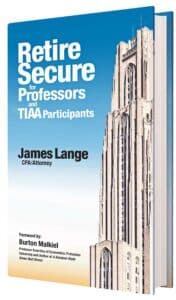
Register today and you will qualify to receive a free hardcover copy of Jim’s 472-page book, Retire Secure for Professors and TIAA Participants. Note: 90% of the content of this book pertains to all IRA and retirement plan owners. The book enjoys 78 glowing reviews on Amazon.com.
Reserve Your Seats and Attend Jim Lange’s Workshops for FREE in July!
Saturday, July 26, 2025
Crowne Plaza Pittsburgh South
164 Fort Couch Road (across from South Hills Village)
Pittsburgh, PA 15241
Call 412-521-2732 or register at PayTaxesLater.com/2025Workshops
while seats are still available.
Disclaimer: Lange Accounting Group, LLC offers guidance on retirement plan distribution strategies, tax reduction, Roth IRA conversions, saving and spending strategies, optimized Social Security strategies, and gifting plans. Although we bring our knowledge and expertise in estate planning to our recommendations, all recommendations are offered in our capacity as CPAs. We will, however, potentially make recommendations that clients could have a licensed estate attorney implement.
Asset location, asset allocation, and low-cost enhanced index funds are provided by the investment firms with whom Lange Financial Group, LLC is affiliated. This would be offered in our role as an investment advisor representative and not as an attorney.
Lange Financial Group, LLC, is a registered investment advisory firm registered with the Commonwealth of Pennsylvania Department of Banking, Harrisburg, PA. In addition, the firm is registered as a registered investment advisory firm in the states of AZ, FL, NY, OH, and VA. Lange Financial Group, LLC may not provide investment advisory services to any residents of states in which the firm does not maintain an investment advisory registration. Past performance is no guarantee of future results. All investing involves risk, including the potential for loss of principal. There is no guarantee that any strategy will be successful. Indexes are not available for direct investment. If you qualify for a free consultation with Jim and attend a meeting, there are two services he and his firms have the potential to offer you. Lange Accounting Group, LLC could offer a one-time fee-for-service Financial Masterplan. Under the auspices of Lange Financial Group, LLC, you could potentially enter into an assets-under-management arrangement with one of Lange’s joint venture partners.
Please note that if you engage Lange Accounting Group, LLC and/or Lange Financial Group, LLC for either our Financial Masterplan service or our assets-under-management arrangement, there is no attorney/client relationship in this advisory context.
Although Jim will bring his knowledge and expertise in estate planning to this workshop and to the meetings, it will be conducted in his capacity as a financial planning professional and not as an attorney. This is not a solicitation for legal services.