



Walter’s Legacy Continues and Other Travel Wisdom
by James Lange, CPA/Attorney
Most of my longtime clients and newsletter readers know that my wife’s father, Walter Weinstein, sponsored an annual vacation for his children, grandchildren, and even great-grandchildren. For the last 30 years, he brought the entire family together to gather in the Poconos for five days of family time — all meals shared together and everyone recreating in the resort’s many activities.
Walter always paid for the following year’s vacation at the end of the trip, so we all knew the tradition was continuing at least through the year following Walter’s death. He passed in December 2025 at age 101, so the expectation was that we would all gather one last time and either stop the tradition or perhaps continue it in a reduced-expense capacity.
Cindy and her brother, Barry, decided to keep the tradition going and split the cost 50/50. My wife tends toward the frugal side and always worries about our daughter’s financial security after we are gone. I think part of her reasoning — which I support 100% — is that keeping the family closer by continuing this tradition will be a great thing for our daughter, not only now but long after we are gone.
But interestingly, the biggest objection I get when recommending family vacations to clients is not necessarily the money. It’s that kids and grandkids have busy schedules and it’s very hard to pick a time when everyone is available. My slightly sarcastic answer to that problem: tell your kids and grandkids that you’re updating your will, and that their attendance — or rejection — of the family gathering is something you take seriously.
For both me and most of the clients I serve, our biggest problem is that we will run out of life before we run out of money. For years, I have been practically begging my clients to spend more money. I have never really advocated buying more stuff — though I confess I’ve bought a lot of stuff lately, and I’ve enjoyed it. That said, it’s been an easier and typically more successful effort to get clients and readers to spend more money on family vacations than any other way of spending money.
Now I want to shift the travel discussion from large, sponsored family vacations to travel for you and perhaps your spouse and/or very close friends.
A recommendation I received from a friend, who received it from a fellow luxury traveler, has always stuck with me. He recommends making a list of all the vacations you would like to take for the rest of your life and rating them in terms of physical difficulty. An example of a more rigorous vacation might be hiking in the mountains in New Zealand — physically demanding just to get there and a serious hiking trip once you arrive. An example of a less physically taxing vacation might be a theater trip or a museum trip to New York City. The recommendation is to start with the more physically demanding trips you can still handle now and reserve the less demanding ones for later. This makes a lot of sense to me.
Of course, a lot of people like to travel with an organized group — whether it’s a physically active trip with outfits like Backroads, or educational and cultural trips through Road Scholars, formerly Elderhostel, or you might prefer a high-end touring company like Tauck, which this same friend highly recommends. The alternative is to pick somewhere interesting and do all the planning yourself.
I’m going to take the liberty of talking about the way I personally like to travel. I want to be the opposite of the old movie joke — if it’s Tuesday, it must be Belgium. My idea of a great trip is picking very few places, or even one place, and going there for an extended period. For example, I’m currently looking at spending a month in Spain or Portugal and staying in perhaps only two places or possibly even just one.
I tend to enjoy active trips right now. That means bike rides in the mountains and hikes in the range of six or seven miles with around 1,000 feet of elevation gain — which is pretty much Cindy’s upper limit for a comfortable hike.
Why not go somewhere, rent a house, maybe have friends join for part of the time, and actually get to know a place? In that way, you’re not spending all your time packing, unpacking, moving, and traveling. It’s a much more relaxing experience than a vacation where you’re moving every day or every couple of days.
One option that I’ve heard nothing but good things about — anecdotally, at least — is river cruising. You sleep in the same place every night but wake up to different scenery and different ports every day.
Usually, since I do prefer longer stays with fewer stops, I tend to prefer Airbnb or Vrbo vacation rentals over staying in hotels. I can also personally recommend the benefits of a home exchange. When our daughter, Erica, was young, we had a professor friend who knew a professor in the Bordeaux region of France who was going to spend a month on a research project at the University of Pittsburgh. He was married with two young children and wanted to stay in a nice house close to the university. Like us, he had a well-appointed house, working cars, and working bicycles. So, we arranged a swap. No money was exchanged, but it was a great experience for both families.
Instead of spending all our time at tourist attractions, we spent a lot of time at the local playground where our daughter, Erica, interacted with young French kids. We used their car and their bicycles, and it was a wonderful experience. The French professor, meanwhile, bicycled to work at the University of Pittsburgh.
The other bonus was that we both had a circle of friends we introduced to each other. When we went to France, we had built-in friends who invited us to dinner. When he came to Pittsburgh, he had built-in friends here. That’s something you don’t get from a hotel.
There are organizations that act as matchmakers for people looking for home exchanges. Pittsburgh, which you might not immediately think of as a great tourist destination, is actually an excellent destination for home exchanges because there are a lot of professors and physicians who have reason to be here for an extended period. They typically want to bring their families. Staying in a hotel for a month is neither as comfortable nor as affordable as staying in a nice house close to where you’re going to work.
As you know, my articles often have an ulterior motive. But, in full disclosure, one of the purposes of this article is to get you to travel more and have a better travel experience.
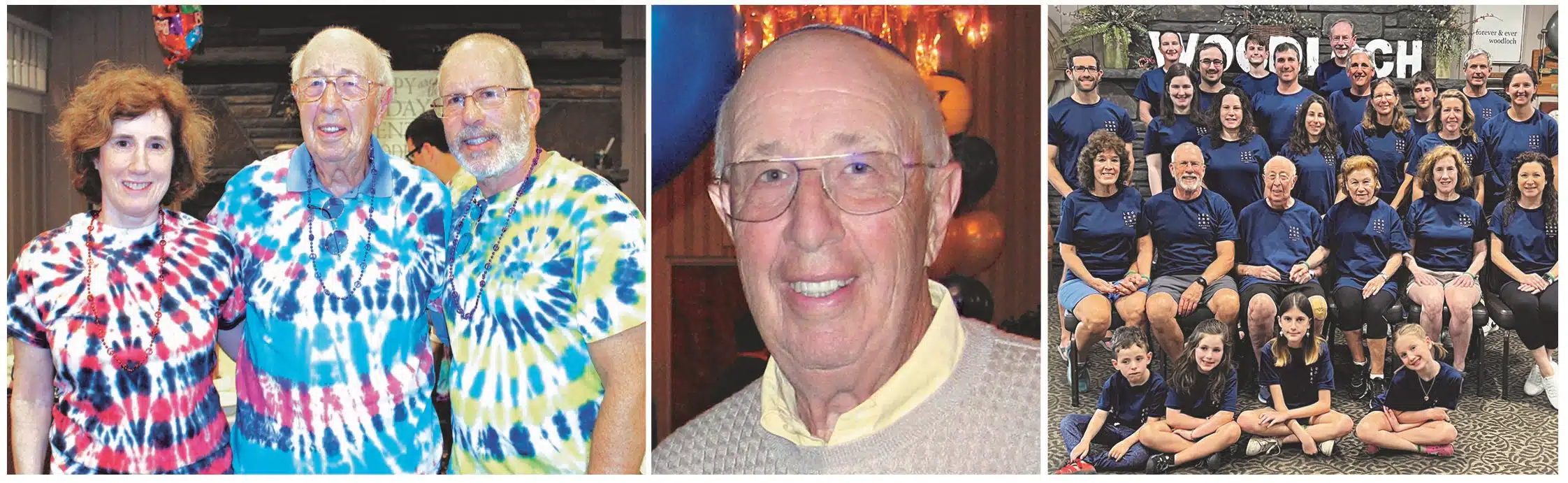
Photos: Cindy, Walter and Barry in 2017; Walter Weinstein in 2008; Woodloch 2023 Family Reunion. Walter passed in 2025 at the age of 101.
Grandparents and Parents of a Child with a Disability or Serious Medical Condition…
You May Be Sitting on a
Million-Dollar Tax Opportunity
Tuesday, July 28, 2026 (Advanced Session) and/or
Wednesday, September 2, 2026 (Family Session)
This estate planning opportunity is worth hundreds of thousands — or in many cases, more than a million dollars — and few are taking advantage of it.
Join Jim and special guest Andrew H. Hook, CELA, AEP, CFP, one of the nation’s foremost authorities on the “chronically ill” exception under the SECURE Act — the little-known pathway that allows the lifetime IRA stretch for families whose loved one does not qualify for SSI or SSDI. Please note that qualifying under the “chronically ill” exception is far easier than qualifying for SSI or SSDI.
Andy is a former president of the Special Needs Alliance (the nationwide network of disability attorneys), a Fellow of both the American College of Trust and Estate Counsel (ACTEC) and the National Academy of Elder Law Attorneys (NAELA), and a co-author of the Special Needs Trust Handbook published by Wolters Kluwer. For 50 years, his practice has focused on coordinating estate plans for families with a child or grandchild who has a disability or chronic medical condition. He will be joining Jim to walk through two powerful approaches.
The first is a strategy Jim used with his own family. Jim had his father-in-law give his wife, Cindy, the choice between inheriting a $500,000 IRA when he passed or disclaiming it to a special needs trust for his daughter, who receives SSDI. He did pass; Cindy did ‘disclaim,’ and the inherited IRA went into his daughter’s special needs trust. That single move is projected to save Jim’s family over $1 million in taxes over her lifetime. Jim will review this strategy in terms of drafting wills and trusts, and he will quantify the advantages of this technique.
The second little-known strategy is for families whose loved one falls somewhere between disabled and independent. Perhaps someone with a serious condition such as autism, a traumatic brain injury, early-stage dementia, or another impairment, who needs substantial support but does not receive SSI or SSDI. As Andy Hook explains, many of these individuals can still qualify for the same lifetime IRA stretch through a separate, widely overlooked pathway — and most families have no idea this option exists.
Finally, Jim will present a section on Roth IRA conversions and planning for special needs beneficiaries.
We are presenting two versions of this material. The more advanced session for disability attorneys and financial professionals is scheduled for Tuesday, July 28, 2026. The family-focused session will take place on Wednesday, September 2, 2026. We scheduled the attorney session first because we want attorneys and advisors who can help implement these strategies to be ready when families come to them.
Watch for our full invitation and registration details in our July newsletter. For now, please mark your calendar — either Tuesday, July 28, 2026, for the more advanced session, or Wednesday, September 2, 2026, for the family-focused session, or both, as the information is so valuable you may want to hear it twice.
To sign up for early registration or to receive free copies of relevant Forbes.com article reprints, or to download a free copy of Jim’s book, Retire Secure for Parents of a Child with a Disability, please visit DisabledChildPlanning.com/Resources.
A Warning about Ticks:
Why I Now Treat All My Outdoor Clothes with Permethrin
by James Lange, CPA/Attorney
If you hike, garden, walk in tall grass, or spend any time in wooded areas, you need to take this seriously. Western Pennsylvania is prime habitat for the black-legged tick, commonly called the deer tick, which is the primary carrier of Lyme disease. Where you live may or may not be a dangerous area for ticks.
Lyme disease is not something you want to get. Left untreated or caught late, it can cause debilitating joint pain, neurological problems, and chronic fatigue that can persist for years. The CDC estimates that approximately 476,000 Americans are diagnosed and treated for Lyme disease each year, and that number has been climbing.
The recommended treatment for an infected tick bite is a course of antibiotics, typically doxycycline, and the earlier you catch it the better. A bull’s-eye rash around the bite is a classic warning sign, though not everyone gets one. If you have been in tick country and develop flu-like symptoms — fever, chills, body aches, fatigue — tell your doctor immediately and mention the possible exposure.
But prevention is far better than treatment. The most effective step I have taken is treating my outdoor clothing with Permethrin, a synthetic insecticide that binds to fabric and kills ticks on contact. It is applied to clothing, not skin, and it survives multiple washings. I also treat my shoes and socks, which I also highly recommend. The brand I use and recommend is Sawyer Permethrin, which comes in a spray bottle and is widely available at REI, Amazon, Walmart, and most outdoor stores.
I will tell you honestly — the process of treating clothes is unpleasant. Do it outside, wear gloves, cover all your skin with clothing and wear a mask. Give everything time to dry completely before wearing. But once it is done, the protection is real, and I feel meaningfully more secure going into the woods knowing my clothes are treated.
You are supposed to check yourself carefully after every outing, and I recommend everyone do the same — ticks often crawl for hours before attaching. That said, I don’t now that I treat my clothes.
Taking a few practical steps can protect your health from a risk that is very real and very preventable.
Disclaimer: Lange Accounting Group, LLC offers guidance on retirement plan distribution strategies, tax reduction, Roth IRA conversions, saving and spending strategies, optimized Social Security strategies, and gifting plans. Although we bring our knowledge and expertise in estate planning to our recommendations, all recommendations are offered in our capacity as CPAs. We will, however, potentially make recommendations that clients could have a licensed estate attorney implement.
Asset location, asset allocation, and low-cost enhanced index funds are provided by the investment firms with whom Lange Financial Group, LLC is affiliated. This would be offered in our role as an investment advisor representative and not as an attorney.
Lange Financial Group, LLC, is a registered investment advisory firm registered with the Commonwealth of Pennsylvania Department of Banking, Harrisburg, PA. In addition, the firm is registered as a registered investment advisory firm in the states of AZ, FL, NY, OH, and VA. Lange Financial Group, LLC may not provide investment advisory services to any residents of states in which the firm does not maintain an investment advisory registration. Past performance is no guarantee of future results. All investing involves risk, including the potential for loss of principal. There is no guarantee that any strategy will be successful. Indexes are not available for direct investment. If you qualify for a free consultation with Jim and attend a meeting, there are two services he and his firms have the potential to offer you. Lange Accounting Group, LLC could offer a one-time fee-for-service Financial Masterplan. Under the auspices of Lange Financial Group, LLC, you could potentially enter into an assets-under-management arrangement with one of Lange’s joint venture partners.
Please note that if you engage Lange Accounting Group, LLC and/or Lange Financial Group, LLC for either our Financial Masterplan service or our assets-under-management arrangement, there is no attorney/client relationship in this advisory context.
Although Jim will bring his knowledge and expertise in estate planning to this workshop and to the meetings, it will be conducted in his capacity as a financial planning professional and not as an attorney. This is not a solicitation for legal services.